News from the DaSSCo mass digitisation programme - October to December 2025
January 13 2026 | News

March 21 2024

News
Last quarter we welcomed four new employees to help us on our digitisation journey. One digitiser, two programmers to work on our data pipelines and a technical intern who went on to do a student project with us developing a way to integrate our image processing with our main IT architecture.
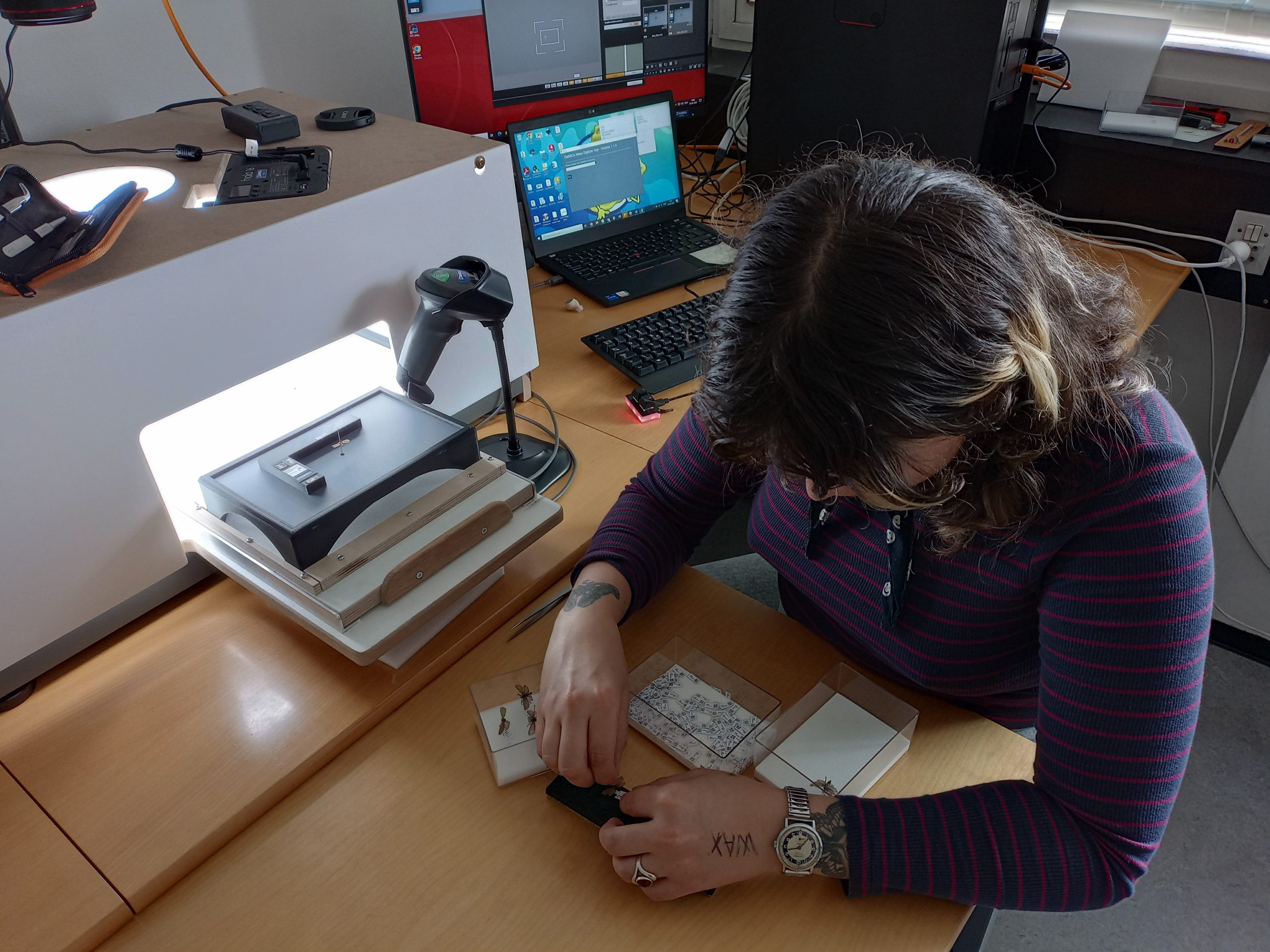
We finally started digitising the pinned insect collection at Natural History Museum Denmark in October 2023 and 20,899 pinned insect specimens were digitised by the end of the year. Experts at the museum kindly spent time training our digitisation team on handling these delicate specimens so they are able to work quickly, but with minimum risk to the specimens. The digitisers are working closely with collection managers and the DaSSCo Technical Team Leader to test and work out any kinks in our workflows.
As part of this first stage of digitisation, we are capturing broad geographic information and taxon name using an app written by the DaSSCo IT team as well as an image of each specimen and its associated labels. See ongoing information on digitisation here.
DaSSCo hosted a workshop in November 2023 in Copenhagen on capturing information from specimen labels. This is the next stage of work for DaSSCo: to develop pipelines to add more scientific data to the online specimen records so they can be used for research, education, and outreach. This data is currently held in images of specimen labels taken during the first stage of digitisation by DaSSCo.
The workshop brought together international experts in digitisation who were willing to share their experience and lessons learned. Thank you to everyone who participated, it was an incredibly valuable day.
As a national research infrastructure, DaSSCo is pleased to work closely with DeiC on finding long-term national solutions for our storage and computation needs. We were awarded two years worth of compute resources from DeiC starting January 2024. These resources will be used to help automate our data pipelines. They will enable efficient ingestion, processing and storage of our images and data and connecting them with Specify that we use to manage our specimen data. This will significantly aid mass digitisation and ensure that we will be able to work at the scales and capacity we need to make mass digitisation a reality.
January 13 2026 | News
October 2 2025 | News
September 3 2025 | News
We use cookies on our website. Some are technically necessary, others help us improve your user experience. You can decline non-essential cookies by selecting “Reject”. Please see our Privacy Policy for further information about our privacy practices and use of cookies.